
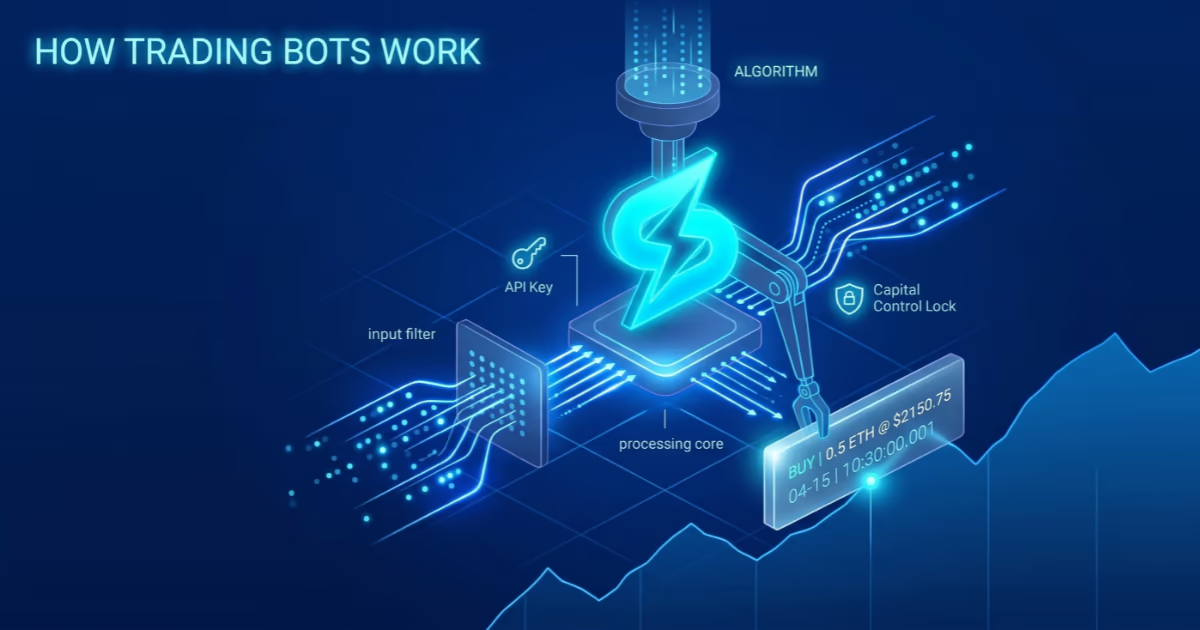
How Trading Bots Work
In modern crypto trading, data processing speed and execution precision are the defining factors of success. A trading bot is not an autonomous intelligence making decisions at its own discretion, but a high-precision automation tool. Let's explore how these algorithms function and the limitations they possess.
1. Interaction Mechanics: The Bot as a Task Executor
A trading bot is a software algorithm that functions as a strict executor of a set Technical Specification (TS). It possesses no subjective opinion and cannot deviate from the given parameters.
The workflow is built on three stages:
- Data Retrieval: Through an API gateway , the bot reads information from the exchange regarding the order book, price ticks, and volumes.
- Algorithm Matching: The bot compares market indicators with your TS (e.g., "if the price of asset X drops to level Y, execute a purchase").
- Sending the Request: When all conditions are met, the bot instantly sends a command to the exchange to execute the order.
2. Security and Capital Control
It is critically important to understand: the bot does not own your funds. It acts merely as a transmitter of commands.
- Asset Storage: Your funds always remain in your personal account on the exchange.
- Permission Limits: The connection between the bot and the exchange occurs via API keys . When configuring them, you grant the bot "Trading" permissions only.
- Withdrawal Prohibition: The "Withdrawal" function for the bot is blocked by default at the exchange setting level. The bot is physically incapable of transferring assets to third-party wallets.
3. Why Algorithms Are More Effective Than Manual Execution
Automation eliminates three key risks inherent to human traders:
- Absence of Emotional Bias: A bot is not prone to panic during a sharp price drop or greed during a rally. It acts exclusively based on a mathematical model.
- Timing Precision: An algorithm can place an order within milliseconds of a signal appearing—something technically impossible to achieve manually.
- Consistency: The bot operates 24/7 , ensuring your strategy is executed at any time of day without loss of concentration.
4. Strategy Implementation on the SteadyEdge Platform
Understanding that a bot is just a tool, the key task becomes choosing a reliable platform to set and monitor these tasks. SteadyEdge provides a professional environment for deploying trading algorithms of any complexity.
We have developed a platform where you can delegate routine operations to proven algorithms while maintaining full strategic control.
SteadyEdge Advantages for Automation:
- Secure Integration: Our platform ensures encrypted connections with leading exchanges, guaranteeing your API keys are used only for executing trading orders.
- Transparent Management: In your dashboard, you can clearly see every action the algorithm takes. SteadyEdge provides full reporting: from the reason for opening a position to the final result.
- High Fault Tolerance: Even during critical market loads, SteadyEdge servers continue to process signals and send commands to exchanges without delays.
- Risk Control Tools: You define the boundaries for the bot by setting limits on position sizing and profit-taking levels.
Conclusion
A trading bot is a disciplined executor that relieves you of the need for constant market monitoring. By using SteadyEdge , you gain more than just automation—you get a professional infrastructure for the precise and secure realization of your trading ideas.